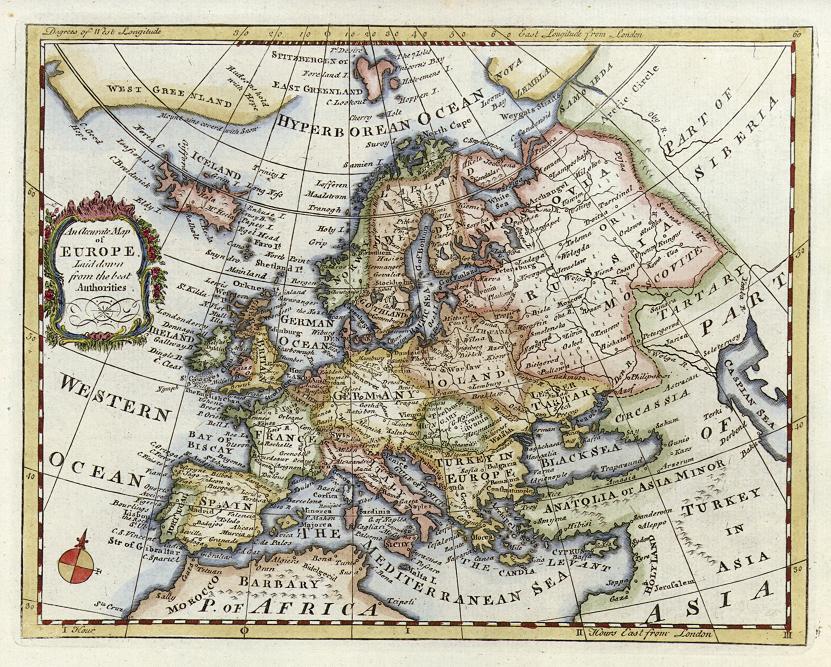
After a cold night in Milan, we enjoyed a cold morning hike to the train station in Milan, where we caught a train. Though delayed, it eventually hauled us across out of Italy, and we passed the next few hours gawking at the alps.
This train deposited us in Basel, Switzerland, which was also exceedingly cold. Our layover allowed us enough time to peek outside for lunch, so we wandered for a bit and whimpered at the prices of lunch until finally realizing that they were in Francs. We also visited a charming Christmas Market in the square, where small Swiss children were lining up to ride a wheeled toboggan down a long wooden slide.
We then returned to the station just in time to see the cancellation of our train to Amsterdam. (Europe has apparently never had snow before, so trains get scared and won't leave their stations.) However, there was a train to Frankfurt, from whence we could catch a connection to Holland. We boarded this immediately and cleverly coerced it into venturing out into the cold.
Arriving in Frankfurt, we had no trouble catching the connecting train, as it was delayed as well, but managed to depart. We did not manage, however, to make it home, for we were unceremoniously dropped in Cologne with the news that all of Holland had simply shut down and that no train would dare approach the border. We were then promised a hotel room for the night, so we waited in line for an hour and were eventually informed that every room in every building in the city and region around Cologne was absolutely filled, and that we should take the next train to Dusseldorf, where every hotel was certainly empty. We did so, and were informed that, if any hotel rooms had ever existed in Dusseldorf, they were filled, and that we should go to Cologne, which has lots of hotels and rooms.
Then the small but irritable crowd of Dutch travellers staged a rather violent and destructive riot, and several information desk workers soon found their heads mounted on pikes. The remaining clerk, nervously watching as we sharpened another stick at both ends, pulled out a dust-covered hotel directory and began calling around. Shocking! There were so many available rooms in Dusseldorf, all within walking distance of the station.
And so, on our third day of attempting to get home, we departed from Dusseldorf delayed by only fifty minutes on a train filled to twice its capacity. This train bravely plowed its way over the Dutch border, and we were able to successfully climb out of it in Utrecht and into an equally crowded regional train to Rotterdam.
From the Rotterdam central station, we ice-skated home, finally presenting ourselves on the doorstep just after noon.
23 December, 2009


22 December, 2009
Trapped in Venice in freak snowstorm!
No worries, we're home in Rotterdam safely! We made it home yesterday afternoon, after three days of struggling our way through a continent covered in snow, with the train network being mostly out of order.
But let's not get ahead of ourselves.
Wednesdaynight we left Patras by ferry, and began our 36 hour boatride to Venice. A welcome lull in our so far busy trip, which we mostly spend reading, napping, playing cards and staring at the water. And then the outline of Venice appeared on the horizon! Sailing into its port, we got our first impression of this city with canals for its streets. It's beautiful. Real beautiful.
And thus began a day of being lost in Venice. Which is to say that we accurately navigated all of Venice, there is just no way to navigate in venice without being totally lost. Which is fine, because all of Venice is gorgeous. The only way to know where you are is to be on the water. Gondola rides turned out to be somewhat beyond our budget, but Venice's public transportation system happens to operate on the same canals. As it turns out, the easiest way to reach our hostel was by a 30 minute boatride on the Vaporetti no. 1 (ie. the waterbus) along the Canal Grande. We right there resolved to one day live in Venice. The search for a Venetion rowing club has begun.
Our hotel here was by far the best we've stayed at during our trip. Not only were they one of the cheapest, they also offered a suprise awesome complementary breakfast, including croissants and Nutella. At this point we started contemplating never leaving Venice again.
And we came dangerously close to realizing that dream, since by then it had already been snowing all night, and by now the water levels has risen sufficiently to put most of Venice underwater. It immediately became clear who were Venetians and who were not, because the Venetians had all pulled out their pairs of emergency galoshes. We are not Venetians. Therefore, we are currently still in the process of tryong to dry our shoes. The only way to reach the trainstation frequently included wading through water well above our ankles. (Epic fail of the day: a flooded cafe, with a 'caution, wet floor' sign staning in about 6 inches of water). But we got there, only to find out that all of Europe had given up on train transportation. It would be the beginning of a long day in the Venice railway station, with very little knowing-what-was-going-on, and very much confused.
Although our plan was to reach Paris that night, we only made it as far as Milan. After saying goodbye to our friends-made-through-shared-misery: 18 Australian high school girls and their three teachers, we had to face reality: we were stranded here for the night and were probably never going to make it to Paris. Sad. But not the end of our adventures.
To be continued...
But let's not get ahead of ourselves.
Wednesdaynight we left Patras by ferry, and began our 36 hour boatride to Venice. A welcome lull in our so far busy trip, which we mostly spend reading, napping, playing cards and staring at the water. And then the outline of Venice appeared on the horizon! Sailing into its port, we got our first impression of this city with canals for its streets. It's beautiful. Real beautiful.
And thus began a day of being lost in Venice. Which is to say that we accurately navigated all of Venice, there is just no way to navigate in venice without being totally lost. Which is fine, because all of Venice is gorgeous. The only way to know where you are is to be on the water. Gondola rides turned out to be somewhat beyond our budget, but Venice's public transportation system happens to operate on the same canals. As it turns out, the easiest way to reach our hostel was by a 30 minute boatride on the Vaporetti no. 1 (ie. the waterbus) along the Canal Grande. We right there resolved to one day live in Venice. The search for a Venetion rowing club has begun.
Our hotel here was by far the best we've stayed at during our trip. Not only were they one of the cheapest, they also offered a suprise awesome complementary breakfast, including croissants and Nutella. At this point we started contemplating never leaving Venice again.
And we came dangerously close to realizing that dream, since by then it had already been snowing all night, and by now the water levels has risen sufficiently to put most of Venice underwater. It immediately became clear who were Venetians and who were not, because the Venetians had all pulled out their pairs of emergency galoshes. We are not Venetians. Therefore, we are currently still in the process of tryong to dry our shoes. The only way to reach the trainstation frequently included wading through water well above our ankles. (Epic fail of the day: a flooded cafe, with a 'caution, wet floor' sign staning in about 6 inches of water). But we got there, only to find out that all of Europe had given up on train transportation. It would be the beginning of a long day in the Venice railway station, with very little knowing-what-was-going-on, and very much confused.
Although our plan was to reach Paris that night, we only made it as far as Milan. After saying goodbye to our friends-made-through-shared-misery: 18 Australian high school girls and their three teachers, we had to face reality: we were stranded here for the night and were probably never going to make it to Paris. Sad. But not the end of our adventures.
To be continued...
16 December, 2009
Mycenae and Epidaurus
Our adventures with the Greek public transportation system on our trip to Thermopoulis taught us one thing: the easiest way to see things in Greece is by tour bus. It does not really fit with our status of backpacking adventurers, but it gets you to the places of interest much quicker and a lot more conveniently. So since there was still so much that we really wanted to see, and little time, we decided to treat ourselves to a day on a bus, with a tour guide, into to the Peloponnese.
Our first stop was the Isthmus between Attica and the Peloponnese, at Corinth. It has a man made canal 6 km long, connecting the Aegean and Ionian seas. Both are very blue. And pretty. The canal is only wide enough for yachts to pass. Commercial sea traffic will have to go around. After that we stopped at the theater of Epidaurus, where we were able to test its famously amazing acoustics. Standing in the dead center of the theater, you will be heard by each and every one of it's 14.000 potential spectators, without a megaphone.
On to the ancient ruins of Mycenae. The Mycenaean civilization, dating from the 17th century BCE, is one of the oldest known in Europe, after the Minoan civilization on Crete, which is even older. We saw the lion's gate (the lions are now missing their heads, because those were made of gold instead of stone, and were never found), the remains of the old city and its grave circles, and the treasury of Atreus, or 'beehive tomb' of Agamemnon. That's right, this is where archeologists believe the famous Greek king Agamemnon was buried. We'll never know for sure, however, since the tomb was found to be completely empty. The only thing that vaguely reminds us of his presence is the large hill across from the Mycenaean ruins. The profile of the hill looks a exactly like the profile of a man, and it is strikingly similar to the profile of one of the golden death masks that was found in a grave on the Mycenaean acropolis. Who knows...
We were provided with a sumptuous lunch at a 'typical Greek tavern' (mmmm, Mousaka) and then it was time to start making our way back home.
Today, we plan on visiting the National Archeological Museum of Athens before boarding out train back to Patras. From there, we will get on the ferry to Venice. To Venice!
XXX Renske & Nicholas.
Our first stop was the Isthmus between Attica and the Peloponnese, at Corinth. It has a man made canal 6 km long, connecting the Aegean and Ionian seas. Both are very blue. And pretty. The canal is only wide enough for yachts to pass. Commercial sea traffic will have to go around. After that we stopped at the theater of Epidaurus, where we were able to test its famously amazing acoustics. Standing in the dead center of the theater, you will be heard by each and every one of it's 14.000 potential spectators, without a megaphone.
On to the ancient ruins of Mycenae. The Mycenaean civilization, dating from the 17th century BCE, is one of the oldest known in Europe, after the Minoan civilization on Crete, which is even older. We saw the lion's gate (the lions are now missing their heads, because those were made of gold instead of stone, and were never found), the remains of the old city and its grave circles, and the treasury of Atreus, or 'beehive tomb' of Agamemnon. That's right, this is where archeologists believe the famous Greek king Agamemnon was buried. We'll never know for sure, however, since the tomb was found to be completely empty. The only thing that vaguely reminds us of his presence is the large hill across from the Mycenaean ruins. The profile of the hill looks a exactly like the profile of a man, and it is strikingly similar to the profile of one of the golden death masks that was found in a grave on the Mycenaean acropolis. Who knows...
We were provided with a sumptuous lunch at a 'typical Greek tavern' (mmmm, Mousaka) and then it was time to start making our way back home.
Today, we plan on visiting the National Archeological Museum of Athens before boarding out train back to Patras. From there, we will get on the ferry to Venice. To Venice!
XXX Renske & Nicholas.
15 December, 2009
Tonight, we dine in Hellas!
That's right. This is the post where I describe our pilgrimage to the truly important places.
When most people visit Greece, after paying their due respects to the Acropolis, they head immediately to the beach, or to a nearby island, where they head immediately to the beach.
We, however, being bold adventurers and devotees of a much nobler appreciation in very old piles of rocks, decided instead to travel northwards. Heading north, you will find that even fewer people speak English and that even fewer people are aware of the history they keep tripping over. You will also find that Greek public transports is largely nonsensical; you will inevitably arrive at your destination, but you can never be entirely sure when, or indeed how.
We eventually arrived, then, in the town of Thermopoulis, which is the sort of roadside town I described early in the previous post. Its primary function seems to be providing something to distract truck drivers from the monotony of the open road. What it is least interested in doing is acknowledging its adjacency to the battlefield of one of the most significant battles in the history of Western Culture.
This is, of course, the battle of Thermopulae, in which a small coalition of Greek hoplites met the mighty Persian army. On the last day of the battle, the Spartan king sent most of the few thousand surviving Greeks home, remaining in the narrow mountain pass with three hundred highly-trained Spartans.
That's kind of a big deal, because it's the beginning of a sense of "Greek-ness," of nationalism. The idea that there's a larger bond between people than the city they call home.
Down the road a ways from 'Thermopoulis,' though, stands a lovely monument to the Spartan King Leonidas, guarding the shores of Greece between two highways. Seeing this bolstered our hopes, though, and crossing the highway, we found the fortified hill of Kolonos. At the top of this, we beheld the famous inscription, as reported by Herodotus himself--"Hey, you there! Go tell the Spartans that we're still here, obeying their orders."
Sweet.
When most people visit Greece, after paying their due respects to the Acropolis, they head immediately to the beach, or to a nearby island, where they head immediately to the beach.
We, however, being bold adventurers and devotees of a much nobler appreciation in very old piles of rocks, decided instead to travel northwards. Heading north, you will find that even fewer people speak English and that even fewer people are aware of the history they keep tripping over. You will also find that Greek public transports is largely nonsensical; you will inevitably arrive at your destination, but you can never be entirely sure when, or indeed how.
We eventually arrived, then, in the town of Thermopoulis, which is the sort of roadside town I described early in the previous post. Its primary function seems to be providing something to distract truck drivers from the monotony of the open road. What it is least interested in doing is acknowledging its adjacency to the battlefield of one of the most significant battles in the history of Western Culture.
This is, of course, the battle of Thermopulae, in which a small coalition of Greek hoplites met the mighty Persian army. On the last day of the battle, the Spartan king sent most of the few thousand surviving Greeks home, remaining in the narrow mountain pass with three hundred highly-trained Spartans.
That's kind of a big deal, because it's the beginning of a sense of "Greek-ness," of nationalism. The idea that there's a larger bond between people than the city they call home.
Down the road a ways from 'Thermopoulis,' though, stands a lovely monument to the Spartan King Leonidas, guarding the shores of Greece between two highways. Seeing this bolstered our hopes, though, and crossing the highway, we found the fortified hill of Kolonos. At the top of this, we beheld the famous inscription, as reported by Herodotus himself--"Hey, you there! Go tell the Spartans that we're still here, obeying their orders."
Sweet.
Αθηνα!
Greece--you know, the rocky place where all that historical stuff used to happen. Immediately apparent is the fact that many of those noble cities, like Sparta, Corinth, Thebes, and Argos, have been destroyed quite thoroughly over the past two millennia, and what remains in their stead are small rural towns which usually contain some rocks, a herd of goats, and a handful of folks who had no idea that an immense, world-famous temple once existed where their tavern now sits.
Athens somehow escaped this giant Eraser of Awesome, however, and we were quite pleased to find that it not only still exists, but has grown to shamelessly cover most of Attica. From the lookout point of the Acropolis, we found that the nearly identical apartment blocks spread out over the city's hills and beyond the horizon. And amidst this mass of humanity, Athens' great landmarks remain intact. The ancient city center holds many wonders, and we happily trotted between them and basked in their timeless glory. The Agora, with the renovated Stoa of Attalos and the well-preserved Temple of Hephaistos; the Odeon of Herod Atticus and the Theater of Dionysos; the Areopagus and the Temple of Olympiad Zeus (a cluster of columns with some grass around them); and of course the Acropolis, with its famous centerpiece, the Parthenon. The Parthenon! What an incredible building it must have been. It's big; real big.
Sunday afternoon then found us in the Peiraias, the city's harbor and rich-people magnet. The sun was kind enough to show itself at this point, and we were treated to a pleasant view of the sunlit Aegean.
Athens somehow escaped this giant Eraser of Awesome, however, and we were quite pleased to find that it not only still exists, but has grown to shamelessly cover most of Attica. From the lookout point of the Acropolis, we found that the nearly identical apartment blocks spread out over the city's hills and beyond the horizon. And amidst this mass of humanity, Athens' great landmarks remain intact. The ancient city center holds many wonders, and we happily trotted between them and basked in their timeless glory. The Agora, with the renovated Stoa of Attalos and the well-preserved Temple of Hephaistos; the Odeon of Herod Atticus and the Theater of Dionysos; the Areopagus and the Temple of Olympiad Zeus (a cluster of columns with some grass around them); and of course the Acropolis, with its famous centerpiece, the Parthenon. The Parthenon! What an incredible building it must have been. It's big; real big.
Sunday afternoon then found us in the Peiraias, the city's harbor and rich-people magnet. The sun was kind enough to show itself at this point, and we were treated to a pleasant view of the sunlit Aegean.
12 December, 2009
Napoli
Friday was our day to explore Naples. Since it was already dark when we arrived at our hostel the night before, we didn't get a full impression of our surroundings until we set foot outside in the morning. As it turned out, our hostel was located in the middle of a construction site, which was now crowded with people selling cell phones and DVDs out of plastic bags. Wading through this center of commerce, however, we didn't feel as uncomfortable as one might have expected. The thing is, everyone in Italy so far has been incredibly nice. No matter how rundown an establishment or street may look, nobody has given us a funny look whatsoever. Even though we're pretty hard to miss, two blond kids with huge backpacks, carrying a map, looking both lost and terribly excited. Even the stray dogs are nice. They're sunbathing at the piazza's, occasionally giving you a heart-melting look with big brown eyes.
Naples was an entirely different from the places we visited earlier on this trip. It's full of narrow, curvy streets which in turn are full of people, cars, mopeds, noise and more people selling cell phones and DVDs out of plastic bags. It's probably the most disorganized city we have seen so far. As we were walking around, we ran into a parade celebrating the public works of Naples and its surroundings (the local police and firemen, for example), for which none had bothered to close the streets to traffic. Consequently, the band was cheerfully accompanied by cars and mopeds honking at each other as they weaved their way through the marching crowd. Nobody seemed to think this was a problem. And it wasn't.
We walked along the coastline, visited the Castel Nuovo and the Castel Dell'Ovo. Our tourguide at the first castle provided us with an explanation for why half the city seems to be under construction. Every time people start digging a hole somewhere, they hit upon some the remains of some ancient temple or fortress. Underneath, there's usually several other treasures to be found, since every new civilizations built on top of the previous one here. Therefore, it tends to take multiple years of excavation before the Neapolitans can actually start laying the foundations of their new metrostation.
Since we had severely upset our hostel's owner the previous night by not following his recommendation for two 'internationally renowned' pizzaria's down the street, we decided to go there for lunch today. He didn't say a word to much, it was definitely quite fantastic. Lasagna on a pizza, who would have thought.
With full stomachs we headed back to the train station, beginning our journey across the country, to the port of Bari.
Naples was an entirely different from the places we visited earlier on this trip. It's full of narrow, curvy streets which in turn are full of people, cars, mopeds, noise and more people selling cell phones and DVDs out of plastic bags. It's probably the most disorganized city we have seen so far. As we were walking around, we ran into a parade celebrating the public works of Naples and its surroundings (the local police and firemen, for example), for which none had bothered to close the streets to traffic. Consequently, the band was cheerfully accompanied by cars and mopeds honking at each other as they weaved their way through the marching crowd. Nobody seemed to think this was a problem. And it wasn't.
We walked along the coastline, visited the Castel Nuovo and the Castel Dell'Ovo. Our tourguide at the first castle provided us with an explanation for why half the city seems to be under construction. Every time people start digging a hole somewhere, they hit upon some the remains of some ancient temple or fortress. Underneath, there's usually several other treasures to be found, since every new civilizations built on top of the previous one here. Therefore, it tends to take multiple years of excavation before the Neapolitans can actually start laying the foundations of their new metrostation.
Since we had severely upset our hostel's owner the previous night by not following his recommendation for two 'internationally renowned' pizzaria's down the street, we decided to go there for lunch today. He didn't say a word to much, it was definitely quite fantastic. Lasagna on a pizza, who would have thought.
With full stomachs we headed back to the train station, beginning our journey across the country, to the port of Bari.
10 December, 2009
Old things.
Location: Naples.
State: tired & busy processing loads of overwhelming impressions.
Wednesday we arrived in Rome in the early afternoon. We quickly found our hostel, which was close to the Santa Maria Maggiore Cathedral. The hostel was called 'David's Flat.' And that was a pretty good description of the place. Our room, however, was in fact very luxurious, clean and secure, and we enjoyed the stay.
Then began the wandering through Rome. We visited the Colosseum, the Pantheon, the Capitol building, Parliament, meandered along the Tiber river and eventually crossed over into the Vatican. By then it was already getting dark, so the only thing still open to visitors was the Saint Peter's Basilica, but that was more than enough. Rather dizzy with all the marble marvels, we set off to a cozy pizzeria for dinner.
The next day, determined to take advantage of our remaining few hours in the city, we returned to the area of ancient wonders and entered the Palatine. Here we beheld the remains of the imperial palaces, gardens, and temples. Then it was on to the ruins of the Forum, and the highlight of any nerd's visit to Rome--we gaped stupidly at the triumphal arches, the temples of Romulus, Saturn, Castor and Pollux, at the Mamertime Prison and the Curia itself. What joy!
And now, a moment to breathe.
Then, a train, racing south along the coast to Naples, where we quickly stowed ourselves aboard another train, bound for the buried village of Pompeii!
Pompeii, as it turns out, is not buried, but is a fully operational suburb with its own immense church, a bank, some seedy houses, and a sprawling archaeological site. All normal things to find in a small town. After some intense consideration, we chose to visit the archaelogical site, where some intrepid souls seem to have unearthed an entire ancient city!
It's big. Real big. Compared to what is left of the ancient sites we saw in Rome, it is truly amazing how much of Pompeii has been preserved. Walking through the ancient streets, peeking into the former mansions of Pompeiian citizens, it is easy to imagine what this city must have been like before the eruption of Vesuvius. Crowded, probably. And smelly. But full of life and pretty darn awesome. We walked around for hours, until it got dark and they chased us out with the dogs. Back to Naples it was.
Tomorrow we're touring Naples, and then it's off to Bari, on the Southern coast of Italy. There, we will board a ferry to Greece. Nicholas can barely contain his glee. Renske would like to emphasize that she is also quite excited. Quite a lot, in fact.
Next post will come from Athens!
Love,
Nicholas and Renske
State: tired & busy processing loads of overwhelming impressions.
Wednesday we arrived in Rome in the early afternoon. We quickly found our hostel, which was close to the Santa Maria Maggiore Cathedral. The hostel was called 'David's Flat.' And that was a pretty good description of the place. Our room, however, was in fact very luxurious, clean and secure, and we enjoyed the stay.
Then began the wandering through Rome. We visited the Colosseum, the Pantheon, the Capitol building, Parliament, meandered along the Tiber river and eventually crossed over into the Vatican. By then it was already getting dark, so the only thing still open to visitors was the Saint Peter's Basilica, but that was more than enough. Rather dizzy with all the marble marvels, we set off to a cozy pizzeria for dinner.
The next day, determined to take advantage of our remaining few hours in the city, we returned to the area of ancient wonders and entered the Palatine. Here we beheld the remains of the imperial palaces, gardens, and temples. Then it was on to the ruins of the Forum, and the highlight of any nerd's visit to Rome--we gaped stupidly at the triumphal arches, the temples of Romulus, Saturn, Castor and Pollux, at the Mamertime Prison and the Curia itself. What joy!
And now, a moment to breathe.
Then, a train, racing south along the coast to Naples, where we quickly stowed ourselves aboard another train, bound for the buried village of Pompeii!
Pompeii, as it turns out, is not buried, but is a fully operational suburb with its own immense church, a bank, some seedy houses, and a sprawling archaeological site. All normal things to find in a small town. After some intense consideration, we chose to visit the archaelogical site, where some intrepid souls seem to have unearthed an entire ancient city!
It's big. Real big. Compared to what is left of the ancient sites we saw in Rome, it is truly amazing how much of Pompeii has been preserved. Walking through the ancient streets, peeking into the former mansions of Pompeiian citizens, it is easy to imagine what this city must have been like before the eruption of Vesuvius. Crowded, probably. And smelly. But full of life and pretty darn awesome. We walked around for hours, until it got dark and they chased us out with the dogs. Back to Naples it was.
Tomorrow we're touring Naples, and then it's off to Bari, on the Southern coast of Italy. There, we will board a ferry to Greece. Nicholas can barely contain his glee. Renske would like to emphasize that she is also quite excited. Quite a lot, in fact.
Next post will come from Athens!
Love,
Nicholas and Renske
08 December, 2009
Bongiorno Milano!
We are in Milan! Monday night, we took the train from Rotterdam to Utrecht, and after a short stroll through Utrecht we boarded the City Night Line which took us through Germany and Switzerland into Milan. Some of us got more sleep than others during this part of the trip (read: Renske was passed out most of the time while Nicholas actually watched the Alps race by) and by the time we arrived at Milano Central Station at about 8:00 am, we were both incredibly excited and quite exhausted.
We sampled quite a bit of the outskirts of Milan (not completely intentionally) before we found the city's downtown area and a suprisingly nice hostel. Then the wandering began ("Hey look, big tower, let's go there!). High point among the many Basilicha's and Palazzo's was the Duomo de Milano: Cattedrale di Santa Maria Nascente. It's huge. It's shiny. And it has lots of spikes and statues. We were impressed. And so we wandered on, had a lovely dinner of something advertised as tortellini but which turned out to be ravioli after all and decided on a grand finale of the day with some gelato. They have lots of gelato here, as well as really wonderful cappucino's, and crepes with Nutella.
Now it's time for Renske to challenge Nicholas to an epic game of Yahtzee, and then sleep. We'll get up early tomorrow to catch our train to Rome.
We love and miss you all!
Ciao! Renske and Nicholas.
We sampled quite a bit of the outskirts of Milan (not completely intentionally) before we found the city's downtown area and a suprisingly nice hostel. Then the wandering began ("Hey look, big tower, let's go there!). High point among the many Basilicha's and Palazzo's was the Duomo de Milano: Cattedrale di Santa Maria Nascente. It's huge. It's shiny. And it has lots of spikes and statues. We were impressed. And so we wandered on, had a lovely dinner of something advertised as tortellini but which turned out to be ravioli after all and decided on a grand finale of the day with some gelato. They have lots of gelato here, as well as really wonderful cappucino's, and crepes with Nutella.
Now it's time for Renske to challenge Nicholas to an epic game of Yahtzee, and then sleep. We'll get up early tomorrow to catch our train to Rome.
We love and miss you all!
Ciao! Renske and Nicholas.
07 December, 2009
The Journey Begins!
Today, we embark on our European marathon, taking a night train from Rotterdam to Milan, passing through Germany and Switzerland as we go. After a day there, we're off to Rome and the wonders of the classical world. The backpacks are packed, the camera is emptied and its batteries are charged, and the rail passes are activated.
So, God willing, we'll see you in Italy tommorrow morning! We should be able to steal a computer long enough to update here. Check back soon. Excelsior!
So, God willing, we'll see you in Italy tommorrow morning! We should be able to steal a computer long enough to update here. Check back soon. Excelsior!
06 December, 2009
Sinterklaas in Den Haag
After exploring the cities of Rotterdam and Amsterdam, the weekend provided an opportunity to spend some time with Renske's family.
Friday night, we celebrated Sinterklaasavond with her parents, younger sister, aunt and uncle and grandmother at her grandmother's house in Den Haag (or The Hague, if you will). The festivities consisted of an eleborate gift-exchange game. Everyone contributes three small, rather random gifts to the pile, and people take turns throwing dice, determining whether they should 'grab a present from the pile' 'steal a present from someone else' 'exhange a present with the person on your left' etc. The whole thing was accompanied by excessive amounts of Sinterklaas candy, extensive discussion about what the actual rules are actually supposed to be and who was going to end up with that purse that was obviously way over the 5 euro price limit, put in by Renske's uncle simply because he likes to sabotage things. Renske's trophies of the night: a bananaholder and a role of toiletpaper printed in Delft blue. Nicholas is now the proud owner of a spoon with a cow on it, and a set of bird-shaped Christmas ornaments.
Saturday morning we went for a run on the rather windy Den Haag beach. The weather so far has been classically Dutch, meaning chilly and lots of rain, but this was a better day and we decided to take advantage of that. After lunch in honor of Renske's dad's birthday, the two of us together with Renske's sister visited the town of Delft. Delft is a small town inbetween Den Haag and Rotterdam, known for its picturesque old city center. And Delft's blue. Obviously. We visited the Old Church (burial site for the Dutch royal family), the New Church (looked older than the Old Church), and spent some time looking for the Middle Aged Church, which had turned out to have bought a convertible and left for Southern France with a hot blonde chick. After an oliebol (Dutch ball of fried dough, eaten around New Year's) it was time to head back home.
-Renske
Friday night, we celebrated Sinterklaasavond with her parents, younger sister, aunt and uncle and grandmother at her grandmother's house in Den Haag (or The Hague, if you will). The festivities consisted of an eleborate gift-exchange game. Everyone contributes three small, rather random gifts to the pile, and people take turns throwing dice, determining whether they should 'grab a present from the pile' 'steal a present from someone else' 'exhange a present with the person on your left' etc. The whole thing was accompanied by excessive amounts of Sinterklaas candy, extensive discussion about what the actual rules are actually supposed to be and who was going to end up with that purse that was obviously way over the 5 euro price limit, put in by Renske's uncle simply because he likes to sabotage things. Renske's trophies of the night: a bananaholder and a role of toiletpaper printed in Delft blue. Nicholas is now the proud owner of a spoon with a cow on it, and a set of bird-shaped Christmas ornaments.
Saturday morning we went for a run on the rather windy Den Haag beach. The weather so far has been classically Dutch, meaning chilly and lots of rain, but this was a better day and we decided to take advantage of that. After lunch in honor of Renske's dad's birthday, the two of us together with Renske's sister visited the town of Delft. Delft is a small town inbetween Den Haag and Rotterdam, known for its picturesque old city center. And Delft's blue. Obviously. We visited the Old Church (burial site for the Dutch royal family), the New Church (looked older than the Old Church), and spent some time looking for the Middle Aged Church, which had turned out to have bought a convertible and left for Southern France with a hot blonde chick. After an oliebol (Dutch ball of fried dough, eaten around New Year's) it was time to head back home.
-Renske
02 December, 2009
Greetings from Newfoundland! Or, ah, Nederlands!
Due to a "medical emergency" (neither of us was involved) our plane to Amsterdam was obligated to make a brief stop in the beautiful and thrilling town of Gander, Newfoundland. Gander is a sprawling metropolis, likely to be counted as the world's largest and most happenin' city within the next few years. We are thankful to have seen this cultural center on the rise, but were even more thankful when the plane was refueled and our journey continued.
Despite the delay, we arrived in Amsterdam just over an hour later than expected, and were soon fast asleep in at Renske's home in Rotterdam.
Since our arrival we have visited downtown Rotterdam, where Nicholas successfully ordered a bagel by speaking what might have sounded somewhat similar to the local language, and to Amsterdam, where he was nearly killed by an onslaught of reckless cyclists. What an exciting place!
Despite the delay, we arrived in Amsterdam just over an hour later than expected, and were soon fast asleep in at Renske's home in Rotterdam.
Since our arrival we have visited downtown Rotterdam, where Nicholas successfully ordered a bagel by speaking what might have sounded somewhat similar to the local language, and to Amsterdam, where he was nearly killed by an onslaught of reckless cyclists. What an exciting place!
Subscribe to:
Comments (Atom)